Sell on Graded Prompts · From the founder
Why sell your prompts here
This page is for people who make good prompts — image, video, or text — and have wondered whether selling them is worth the trouble. Here is how the seller side works, what we pay, and what it costs you, including the parts that aren’t in our favour.
The problem
Selling prompts anywhere is a trust problem
A prompt is the one product you can’t show before you sell it. Reveal it and there’s nothing left to buy. So on most marketplaces the buyer pays on faith, your four example images are the whole pitch, and the market has no way to tell a prompt that works from one that produced those images on the fortieth attempt with some Photoshop on top. Ratings sort it out eventually, at the expense of everyone who bought first.
That hurts good sellers more than bad ones. If your prompt converges every time and it sits next to a cherry-picked listing with prettier previews, the buyer can’t tell you apart. Volume marketplaces reward the better thumbnail.
What we do instead
Nothing auto-publishes
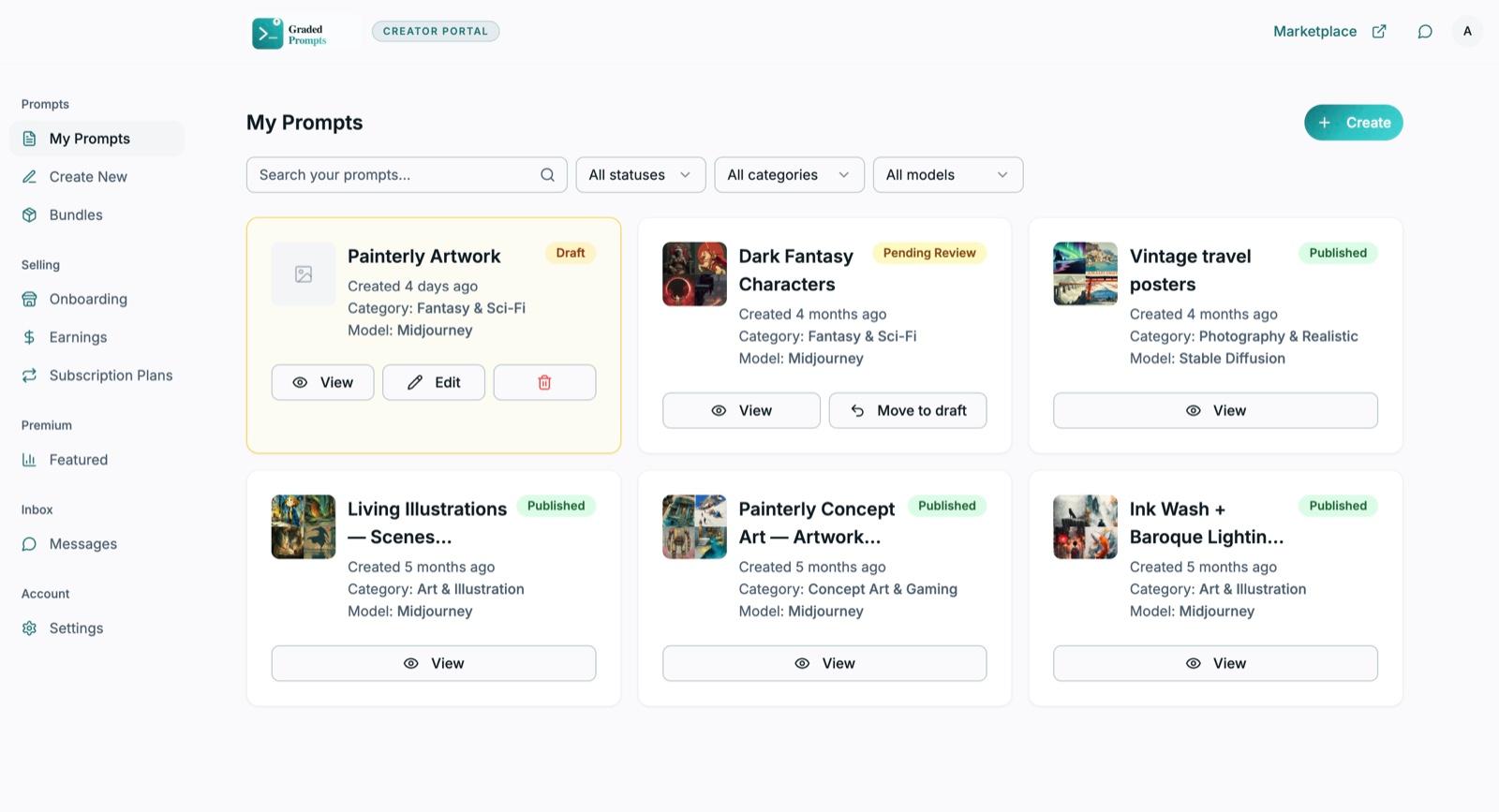
Before a prompt goes on sale — free or paid — a person reads the listing against what the prompt actually does (title, description, category, tags), checks that every variable is labelled and the instructions are complete, fills the variables with sample values, and runs it on the model it was written for. The output goes next to your examples. If it matches, the prompt publishes with a Graded badge. If it doesn’t, it comes back to you with specific notes, and you fix and resubmit. The criteria are published in full in how we grade.
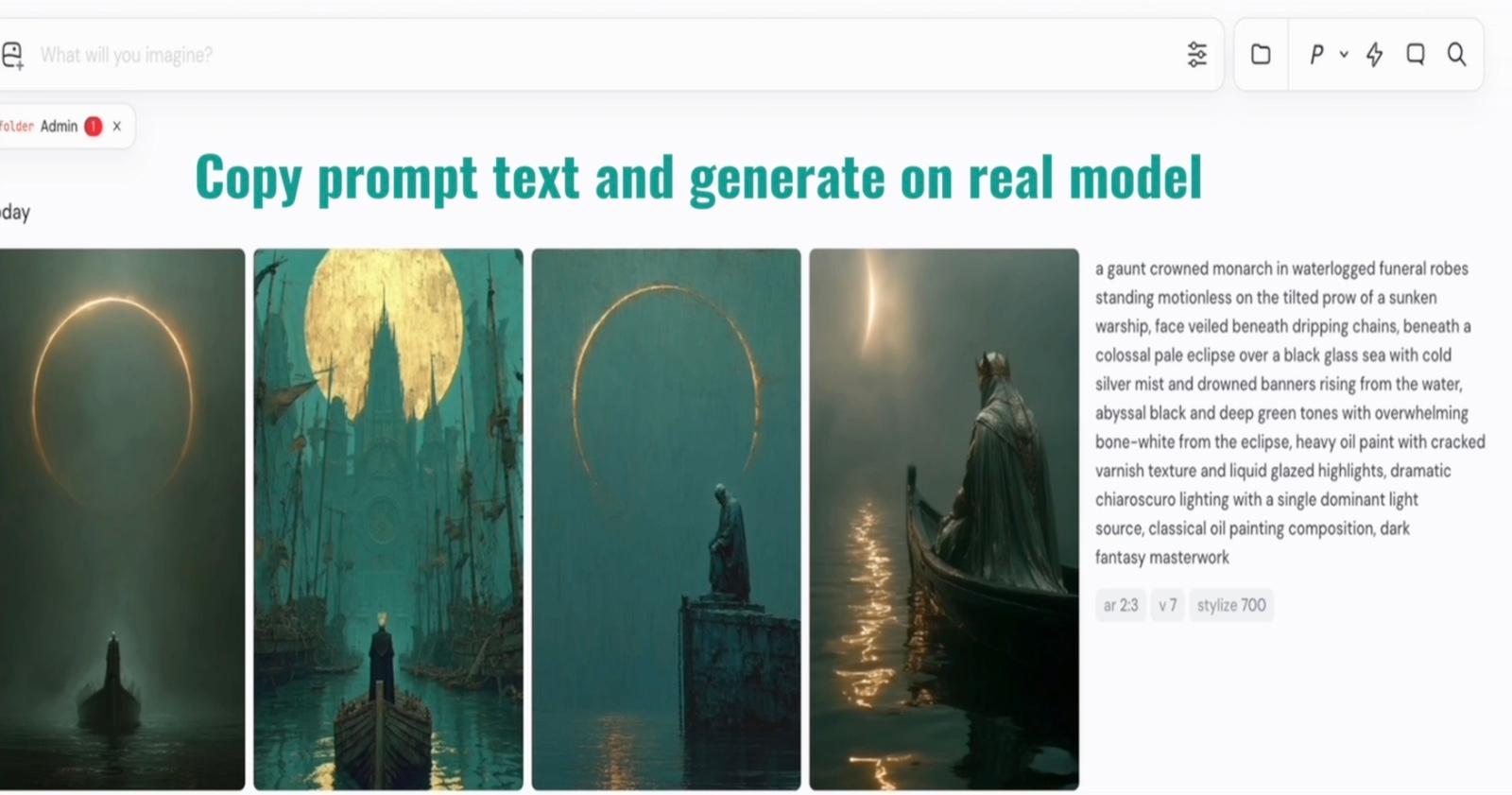
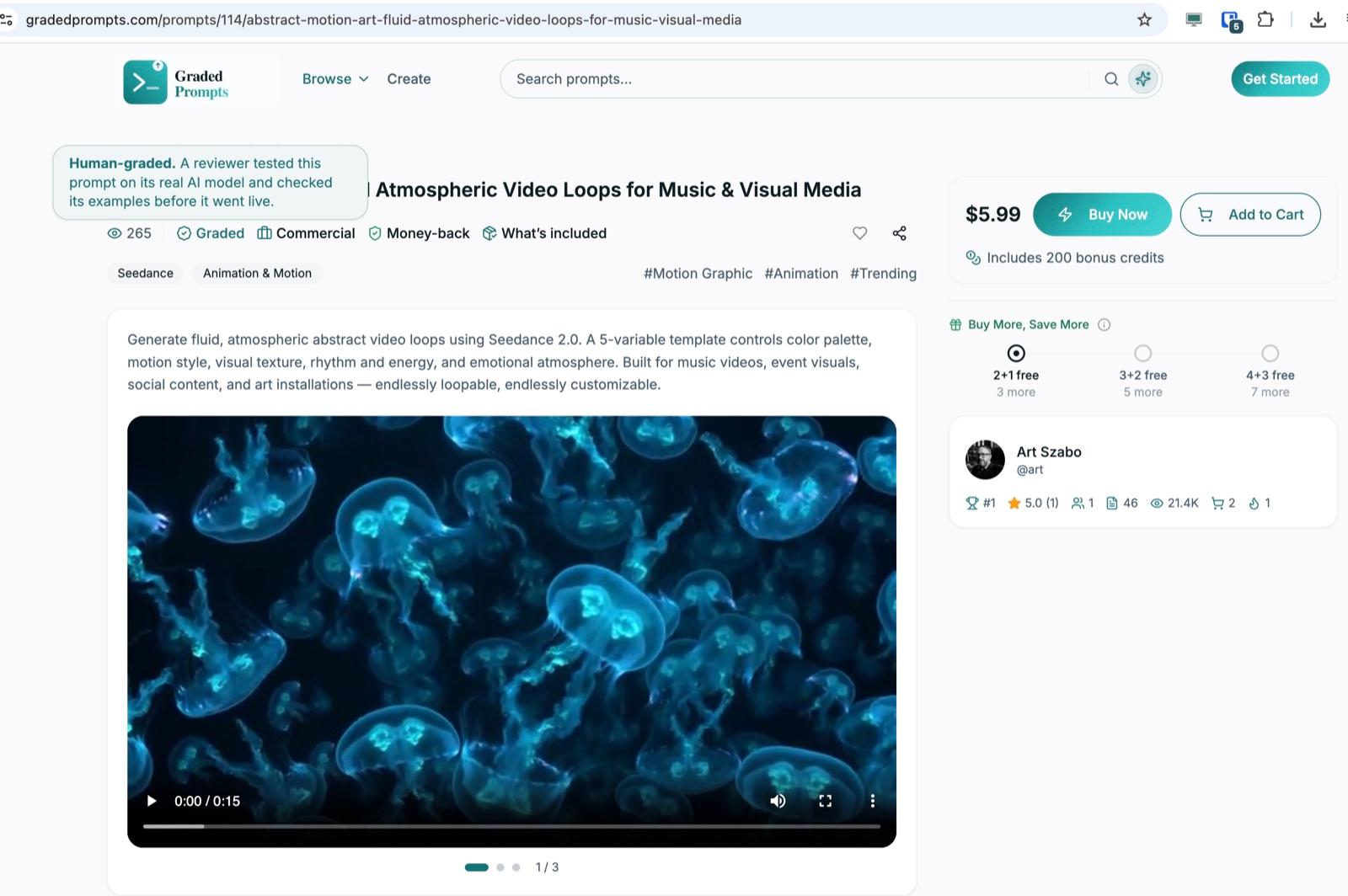
We know “manual review” sounds like a gate. In practice it works more like an editor: the feedback is specific, and the badge means your work isn’t buried under untested uploads. Every listing on the site tells the buyer that a human ran this prompt on the real model before it went live. That’s the trust you inherit by listing here.
The economics
What you keep, and what we handle
You keep 85% of every sale
No listing fees, no tiers, no "pro" plan that unlocks a better split. You set the price, anywhere from free to $9.99.
The same 85% on subscriptions
Offer your own monthly plan — priced by you, with an optional discounted yearly — that lets subscribers claim a set number of your prompts each month. Claimed prompts stay in their library, and you’re paid as the revenue accrues rather than in a lump that could later be clawed back.
We sell as merchant of record
Checkout, receipts, fraud, refunds, chargebacks, and buyer support are ours. If a buyer has a problem, they raise it with us within three days of purchase and we review it. It doesn’t land in your inbox.
Payouts through Stripe or in USDC
Stripe payouts go out from a $30 balance on a monthly cycle, after the standard chargeback hold. Or take USDC to a wallet you control.
The countries Stripe payouts cover are listed in the creator portal. The full terms are in the Seller Agreement, which you accept when you open a portal account.
Bringing you buyers
A split only matters if there are buyers on the other side of it
So here is what the site does on your behalf:
Buyers can run your prompt before they rely on it. Every paid prompt comes with bonus credits (at least 100) that the buyer spends running it inside the platform, on the real model, with their own inputs. For image and video prompts, a buyer sees your prompt work on their subject before they build anything on it — the strongest argument for buying a tested prompt over a cheaper untested one. Text prompts are copy-first by design.
AI search. Buyers describe what they want in plain English and the search maps the request to your listing. Nobody has to guess the vocabulary you used in your title.
Followers get an email digest when you publish something new, and buyers can message you from your storefront.
Bundles and creator subscriptions are there once you have a catalog, and homepage Spotlight and Featured placements are available to premium sellers (currently enabled on request).
Sitewide promotions include your prompts automatically — the discount campaigns and buy-X-get-Y offers we run from time to time — with a per-prompt opt-out if you’d rather sit one out. In a multi-seller "buy two, get one" cart, revenue is shared pro rata by listed price, so nobody’s prompt is the one that went free.
The honest downsides
What we won’t dress up
Grading takes time. Auto-publish platforms list you in minutes; we don’t. We won’t quote a turnaround, because it depends on the queue and on how many rounds your prompt needs.
The catalog is young. We launched in June 2026. The buyer base is growing, but the site is smaller than the marketplaces you’ve heard of. You’re early, and that cuts both ways.
Rejections happen, and the usual reason is avoidable. If your examples came from a different version of the prompt than the one you uploaded, the reviewer’s run won’t match and the submission comes back. Sellers who generate their examples with the exact template they submit sail through. Sellers who tidy the template afterwards don’t.
Text prompts don’t run in-platform, so the credits argument above is an image and video argument.
From the founder
Why I built it this way
The cost of a bad prompt was never the $3. I burned every credit I had trying to get Kling to shoot a clothing ad — a model and a boot staged beside a car — and no matter how I rewrote the prompt, it kept putting both of them on the wrong side of the car. I never got the shot. Getting an image or video prompt to actually deliver takes hours and credits, and that’s what a buyer is paying a skilled creator for: someone already spent them.
The other half is that the people who are genuinely good at this should get paid properly for it. Human review doesn’t scale, and I’ve built the business around the one step that can’t be automated. I’d make the same call again.
— Ahmed, founder of Graded Prompts
Ready to list your first prompt?
The creator portal shares one account with the marketplace. The wizard walks you through template, variables, examples, and price — and a prompt that passes grading is on sale to every buyer on the site.
Same account you use to shop — no extra signup. The portal opens in a new tab.